
1.1.5 HOW TO LISTEN
HOW TO LISTEN

1.Warm-Up
- Are you a good listener?
- What do you do when someone is speaking but you lose focus?
- What makes someone a bad listener?
2A. Vocabulary Matching Activity
2B. Discussion
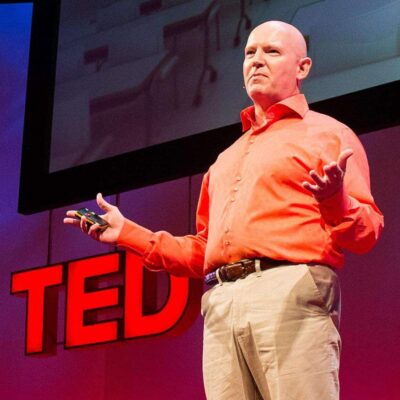
3A. Video Part 1: The Problem with Listening (0:00–2:15)
Click HERE to watch the video
3B. Post-video
3C.Discussion
Based on the video so far, discuss the following questions
1. Do you agree that we only retain about 25% of what we hear? Why or why not? Can you think of a time when you misunderstood or forgot something important because you weren’t really listening?
2. How would you define “listening”? Is it different from “hearing”? Do you think listening is a skill that can be improved?
3. What kinds of sounds do you usually filter out during the day? Are there any sounds that you’ve stopped noticing because you hear them all the time?
4. Have you ever had the experience of hearing your name in a noisy place? Why do you think our brains respond to that?
5. What “filters” might affect what people pay attention to when listening? (e.g. culture, mood, background, interest)
6. Do you usually listen to people with full attention, or do you sometimes get distracted? What makes it hard to give someone your full attention?
7. Treasure says he tries to listen to his wife “as if for the first time.” What do you think of this idea? Could this attitude help in other relationships (friends, colleagues, clients)?
8. Have you ever closed your eyes to help you focus on listening? What did you notice? How does sound help you understand your surroundings?
9. Treasure says listening helps us experience the flow of time. Do you agree? Can you think of sounds that make you feel time passing (e.g. ticking clock, music, birds in the morning)?
10. In your opinion, are people today worse at listening than in the past? Why or why not? What role do smartphones or modern life play in this?
4A. Video Part 2: Simple Exercises to Practice Listening (2:17–5:20)
Julian mentions various reasons why we’re losing our listening.
4B. He also mentions 3 exercises to improve conscious listening (4.08-5.20):
4C. Post video: Discuss these questions:
- Have you tried any of these exercises? Which one seems easiest/hardest to try in real life?
- Which of these problems do you notice most in your own life or country?
- Do you agree that technology or noise is affecting how well we listen?
- What effect do headphones and sound bubbles have on social interaction?
5A. Video Part 3 (5:21–7:45)
While you listen to the last part, find the answers to these questions:
- What does he mean by “listening positions”?
- What’s an example of shifting your listening position?
5B. R.A.S.A. Method:
Do you already use RASA when listening? What’s new or surprising about it for you?
6A. Here are the 5 techniques to better listening according to Julian Treasure.
1. Silence
Take three minutes of silence each day to reset your ears and recalibrate your listening. If silence isn’t possible, quiet is good enough. This helps you regain sensitivity to subtle sounds.
2. The Mixer
Practice identifying how many individual sounds or “channels” you can hear in a noisy environment (like a café or nature). This trains your brain to separate and focus on multiple sounds, improving auditory discrimination.
3. Savouring
Enjoy and find value in mundane or everyday sounds, such as a coffee grinder or a tumble dryer. This helps you stay present and attentive, discovering beauty in ordinary audio experiences.
4. Listening Positions
Adjust your listening perspective or filters depending on the situation. For example, you can shift from critical to empathetic listening. This helps you become more conscious and intentional about how you listen.
5. RASA
A communication technique for active listening:
Receive – Pay attention.
Appreciate – Use little noises like “hmm,” “OK” to show you’re listening.
Summarise – Use words like “so…” to recap.
Ask – Ask questions to engage further.
6B. Group Discussion
- Which of the 5 techniques would you like to try first?
- Where in your life would better listening improve communication?
- What’s your biggest distraction when trying to listen?
7. Activity: Using RASA
The speaker talks for 1–2 minutes about a personal topic, such as:
- a travel experience
- a challenge they overcame
- a recent success or frustration
- something they’ve learned recently
The listener uses RASA:
- Receives – gives their full attention (no interrupting)
- Appreciates – gives small verbal or nonverbal signs (e.g., “Oh really?”, nodding)
- Summarizes – when the speaker finishes, the listener restates the main points in their own words
- Asks – finishes by asking a thoughtful follow-up question
Switch roles
Each person gets a turn to be the speaker and the listener.
7B.Feedback: How did it feel to be truly listened to?
- Was summarising difficult?
- Did you learn something unexpected from a classmate?
8A. Language focus: Present Simple vs Present Continuous
In the video Julian Treasure used the:
- Present Simple for Facts and General Truths: Used to describe general realities and habitual behaviour.
🗣 “We spend roughly 60 percent of our communication time listening.”
🗣 “We retain just 25 percent of what we hear.”
Activity: Write 3 true statements about listening using the Present Simple.
- Present Continuous for Ongoing Change: Used to describe current social or technological trends.
🗣 “We are losing our listening.”
🗣 “We’re becoming desensitized.”
Identify 3 social trends using the Present Continuous (e.g. We are relying too much on phones).
9.Debates/Discussions
Look at the following statements by Julian Treasure. Choose one or two to debate / discuss, divide into 2 groups and prepare ideas. Then when you are ready, have a debate/discussion.