
1.1.1 INTRODUCING YOURSELF PROFESSIONALLY AND CASUALLY
INTRODUCING YOURSELF PROFESSIONALLY AND CASUALLY



1.Ice breaker: Two truths and a lie
Write 3 sentences about yourself – two true and one false – related to your personal or professional life. E.g.
- I’ve worked in three different countries
- I’m currently writing a book.
- I have five brothers.
Take turns saying your sentences and then guess which statements are true or false.
2.Discussion
- When you meet someone for the first time, what information do you usually share?
- How do you introduce yourself professionally versus casually?
- Do you introduce yourself any differently online?
3A.Vocabulary
3B. Activity 1
Guess the personality adjectives from the pictures:
3C. Activity 2
3D. Would you use any of these adjectives to describe yourself or people you know?
3E. Discussion
- In what situations is it most important to be pragmatic rather than idealistic in your profession?
- How can a charismatic leader positively or negatively influence a company’s culture?
- Why is being meticulous important in professions like law, finance, or engineering?
- Why is tenacity often mentioned as a key trait for entrepreneurs?
- Have you ever been called absent-minded? What happened, and how did you feel about it?
- Do you consider yourself more pragmatic or idealistic in everyday life? Can you give an example?
- Who is the most industrious person you know, and what do you admire about them?
- What helps you stay level-headed during stressful or emotional situations?
- Can you share a time when you had to be especially resourceful to solve a problem in your personal life?
- Have you ever had to show empathy in a difficult situation? What did you learn from it?
Professional vs. Casual Introductions
In pairs, one student will introduce themselves in a professional setting (e.g., at a networking event or meeting), while the other will introduce themselves in a casual setting (e.g., at a party or casual social event).
- For the professional introduction, you should include:
- Your name, job, and company
- Your role and what they do
- A formal greeting like “It’s a pleasure to meet you”.
For the casual introduction, you should include:
Your name, hobbies, and interests
A more informal greeting like “Hey, how’s it going?” or “Nice to meet you.”
Task 2: Group Discussion
- After practising in pairs, introduce yourselves to the whole class (both professionally and casually).
- What differences did you notice between a professional and casual introduction?
- Which adjectives of personality would be most appropriate in each setting?
5A. Grammar Practice - Present Simple vs. Present Continuous
Introduction and Explanation
- The present simple is used for routines, facts, and general truths
- Present Simple: “I work at [company].”
- The present continuous is used for actions happening right now or around the present time.
- Present Continuous: “I’m currently working on a new project.”
5B. Uses - Differences between the two tenses.
| Present Simple | Present Continuous |
| 1. State vs. Action Verbs (Stative vs. Dynamic) | |
| used with stative verbs (e.g. know, believe, want, seem) because they describe states, not actions. | rarely used with stative verbs unless they’re used dynamically. |
| “I think it’s a great idea.” Stative meaning (opinion) | “I’m thinking about moving abroad.” Dynamic meaning (process) |
| 2. Repeated Actions vs. Annoyance | |
| for neutral, habitual actions | for irritation or emphasis, often with ‘always’, ‘constantly’, or ‘forever’: |
| “He always arrives late.” | “He’s always arriving late!” (implies annoyance) |
| 3. Changing Situations / Trends | |
| Facts or things that don’t change easily. | Situations that are developing or in flux. |
| “The climate in Spain is dry.” | “The climate is becoming more unpredictable.” |
| 4. Commentary, Narrative, and Headlines | |
| often used in: | used to set the scene or for vivid storytelling: |
| Headlines “Government approves new law.” | “I’m standing in front of the Eiffel Tower, and suddenly a man shouts…” |
| Sports commentary “She passes to the striker…” | |
| Stage directions: “John enters and sits down.” | |
| 5. Scheduled vs. Personal Arrangements | |
| Official or fixed schedules. | Personal, planned arrangements. |
| “The train leaves at 7 p.m.” | “I’m meeting Sarah at 7 p.m.” |
| 6. Grammar + Pragmatics Integration | |
| a speaker might choose one tense over the other depending on tone, emphasis, or social context. | |
| “He works a lot.” | “He’s working a lot these days.” |
| (neutral) | (focus on current, perhaps exceptional situation) |
Pragmatics is the study of language in context, focusing on how speakers use words and sentences to achieve communicative goals and how listeners infer the meaning beyond the literal words spoken.
5C. Practice
5D. Spot the difference
5D. What’s the difference in meaning between the uses of the two tenses?
- a. She works in Milan.
b. She’s working in Milan. - a. I think he’s right.
b. I’m thinking about what you said. - a. He always forgets my birthday.
b. He’s always forgetting my birthday!
Which one sounds more emotional, more permanent, more temporary? Why?
5E. Role Play: Irritations and Trends
Take turns playing roles where you need to complain (using present continuous with “always”), or describe trends in your field (e.g. business, technology, education).
Prompts:
- Complain about a colleague who always leaves dirty coffee mugs.
- Talk about how work habits are changing in your industry.
- Complain humorously about a roommate’s bad habits.
- Describe how people’s social media use is evolving.
5F. Change Over Time Discussion
In pairs, discuss how certain things are changing in your country, industry, or lifestyle.
Topics:
- Eating habits
- Working hours
- Gender roles
- Language use
- Technology at work
Eg: “People are spending more time online, but face-to-face meetings still play a key role in business.”
Pronunciation -s and -ing Endings
6A. Task 1: Look at the following words then repeat them out loud.
work vs works
call vs calls
say vs says
ride vs rides
watch vs watches
be vs being
go vs going
says vs saying
6B. Task 2: Drill and Repeat practice saying different sentences, focusing on pronunciation.
- He usually works from nine to six, but today he prefers to work late in the evening to finish the project.
- Whenever she calls me, I try to answer immediately, even if I’m in the middle of something important.
- People often say that patience is a virtue, but she says it requires practice and self-control.
- He takes the bus to work every morning, even when the weather is less than ideal.
- She watches the news every morning before getting ready for work.
- Being punctual and reliable is crucial when working in a fast-paced environment.
- We usually go to the gym after work, but this week we’re going to try a new yoga class instead.
- He says that honesty is the best policy, though sometimes people find it difficult to be completely truthful.
- Saying “thank you” sincerely can have a profound effect on relationships, both personal and professional.
7A. Phrasal verbs and Idioms
Meeting People & Forming Relationships
- Hit it off – “We hit it off right away.”
(To get along very well from the start) - Get on like a house on fire – “They got on like a house on fire—instant connection.”
(To become very friendly very quickly) - Click with someone – “I immediately clicked with my new colleague.”
(To feel a strong connection with someone right away) - Strike up (a conversation) – “We struck up a conversation at the networking event.”
(To start a conversation or relationship) - Warm up to someone – “At first I wasn’t sure, but I really warmed to her over time.”
(To gradually start liking someone)
First Impressions & Perceptions
- Come across as – “He comes across as confident but humble.”
(To be perceived a certain way) - Give off (a vibe/impression) – “She gives off a very professional vibe.”
(To emit or project a certain impression) - Rub someone (up) the wrong way – “He rubbed me (up) the wrong way at first, but now we get along.”
(To unintentionally annoy or offend someone) - Put someone off – “Her arrogance really put me off.”
(To cause dislike or disinterest) - Make a good/bad impression (not a phrasal verb)– “He made a great first impression on the team.”
(To be perceived positively or negatively upon first meeting)
Accidental Encounters
- Bump into someone – “I bumped into an old friend downtown.”
(To meet someone by chance) - Run into someone – “I ran into my professor at the café.”
(Synonym of bump into—informal) - Come across someone/something – “I came across a great article on negotiation.”
(To find or meet by accident)
7B. Practice exercise
7C. Find Someone Who…
Ask questions to the other students to find someone who…
- …has bumped into someone famous.
- …came across something unusual online recently.
- …hit it off with someone on their first day of work or school.
- …rubbed someone up the wrong way unintentionally.
- …struck up a friendship in a surprising way.
Use follow-up questions like “What happened?” or “How did they react?”
7D. Story Completion (Creative writing or pair speaking)
Instructions: Continue the story using at least three of the target expressions:
“I was on my way to a job interview when I ran into an old friend. We hadn’t seen each other in years, but we immediately hit it off again…”
Students continue orally or in writing, incorporating phrases like come across as, strike up, make a good impression, etc.
7E. Discussion questions
1.Can you remember a time when you hit it off with someone instantly? What do you think made that connection possible?
2. Have you ever got on like a house on fire with someone who seemed very different from you at first?
3. Is it important to click with your coworkers, or is professionalism more important than personal connection?
4. Are you good at striking up conversations with strangers? Why or why not?
5. Have you ever slowly warmed up to someone you didn’t like at first? What changed your mind?
6. What kind of vibe do you try to give off in professional settings like interviews or meetings?
7. Have you ever rubbed someone the wrong way without meaning to? What happened?
8. What kind of behaviour puts you off when meeting someone new?
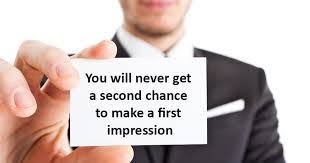
9. What do you think is the key to making a good first impression in a job interview or networking event?
10. Have you ever bumped into someone in an unexpected place? How did the encounter go?
8.Task: Personal Information Questionnaire
- With a partner, create a questionnaire to ask the other students. The objective is to practise introductions, personality adjectives, and use present simple and present continuous and the phrasal verbs and idioms from this lesson.
For example:
- What is your job?
- Where do you work?
- What are you working on at the moment?
- What do you like to do in your free time?
- Have you ever bumped into someone famous?