
3.2.4 ARE WE ALREADY AT THE TIPPING POINT?
ARE WE ALREADY AT THE TIPPING POINT?
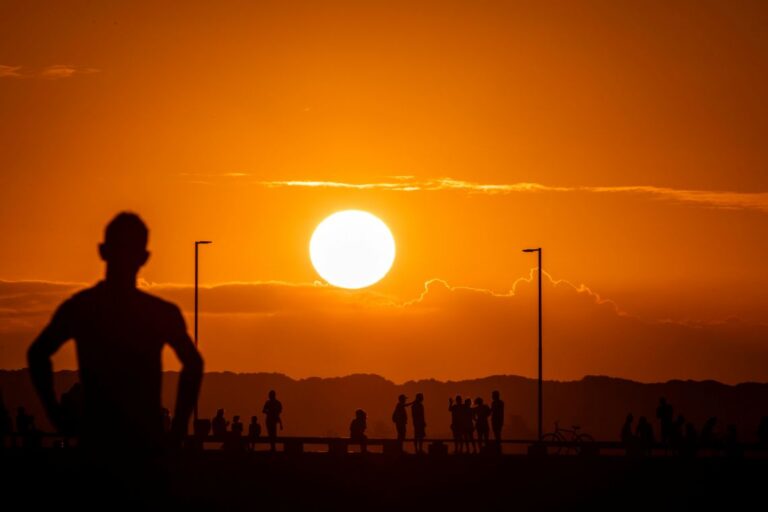
- Warm Up
Look at the following headlines:
- The Amazon could reach a tipping point by the 2040s [news.mongabay.com]
- Europe is now the fastest-warming continent, with extreme heatwaves [rte.ie]
- Global CO₂ emissions reached record highs in 2025 [iea.org]
Task (in pairs):
- Which story is most alarming?
- Which represents a real watershed moment?
Example: What worries me most is the rate at which emissions are increasing.
2A. Language: Cleft Sentences Revision
In written and spoken English we use Cleft Sentences to connect what is already known to what is new or to focus on a specific part of the sentence for emphasis.
1. It-Clefts (Focusing on a Noun/Subject)
Structure: It + is/was + [emphasized part] + that/who…
- Cleft: It is plastic pollution that is destroying the oceans (not carbon emissions).
2. What-Clefts / Pseudo-Clefts (Focusing on a Verb or Clause)
Structure: What + [clause] + is/was + [emphasized part]
- Cleft: What we need is a change in the law.
3. All-Clefts (For extreme limitation)
- Cleft: All I wanted to do was help!
- Cleft: All I asked for was a glass of water!
2B. Practice
Try and reformulate these real news stories using the structures above:
- Europe is warming faster than the rest of the planet
- Global CO₂ emissions reached record highs in 2025
- The Amazon could reach a tipping point by the 2040s
Examples:
- It is Europe that is warming at twice the global average.
- What scientists are warning about is the acceleration of warming.
- All we can do is try our best to improve things.
Predictions:
- “What will be happening by 2050?”
- “What will we have lost by then?”
3.Role Play: Live News Panel
Scenario: A global news channel is discussing: “Have we already passed the climate tipping point?”
Each student chooses one of the following roles and takes part in a live news panel discussion:
Climate scientist
Politician
CEO (accused of greenwashing)
Environmental activist
Journalist / Moderator
Try and refer to:
- Extreme weather across Europe (heatwaves, droughts, storms) [planet.news]
- Biodiversity loss / urban expansion
- Carbon emissions trends still rising
Speaking goals. Try and use at least:
- 5 vocabulary items
- 2 cleft sentences
- 2 future forms
4.Opinions
Discuss the following topics:
5. Debate
Motion: “We have already crossed a global tipping point.”
Use evidence from news:
You can refer to the following articles:
- Coral reef collapse / climate thresholds [earth.com]
- Risk of irreversible “hothouse Earth” [theguardian.com]
Language targets:
- What the evidence shows is…
- It is human activity that has caused…
- By 2100, we will have triggered…
6A. Extreme weather
In pairs, describe recent or typical weather:
- “Describe the most extreme weather you’ve experienced.”
Example:
It was the humidity that made the heat unbearable.
6B. Role Play: “Live Weather Emergency”
Scenario: You are part of a live TV weather broadcast during a climate crisis
Task: Perform a live broadcast
Useful language:
- By tomorrow, temperatures will have dropped below zero.
- This time next week, people will be dealing with ongoing flooding.
- What we’re seeing is a sudden surge in extreme weather.
- It is the wind that is causing the most damage.
TV weather presenter
Field reporter
Scientist
Local resident
Situation cards
1.Heatwave & Drought
- boiling heat
- dry → drought conditions
- water levels dwindling
2.Flood & Storm
- pouring rain / heavy showers
- thunder, lightning, hail
- rising floodwaters
3. Blizzard
- below zero temperatures
- freezing winds
- icy roads, low visibility
4. Tropical Storm
- humid, warm air
- hurricane conditions
- strong winds and heavy rain
7. Discussion: Climate & Weather Trends
Questions:
- Are extreme weather events becoming more mainstream or still unusual?
- Which weather patterns are soaring or becoming more frequent?
- Is this a temporary trend or a tipping point?
- How will cities be coping with weather in 2050?
Example: By 2050, many regions will have experienced repeated droughts.
- Mini-Speaking Challenge
Topic: A day in 2050 during extreme weather
Describe:
- What is happening
- What will be happening
- What will have changed
Example
By 2050, many coastal cities will have been dealing with regular flooding, and what people will be facing is a completely different climate reality. It is the intensity of storms that will have changed the most.
To download the pdf for this topic, click on the following link: https://drive.google.com/file/d/17_Y9gZbmLQrdN6MAEhjtDbaoOL1t8_vr/view?usp=drive_link