Topic 1.5.2 Ellipsis and Substitution

ELLIPSIS AND SUBSTITUTION

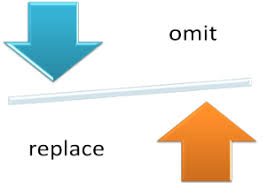
Ellipsis: The omission of words in a sentence because they are understood from the context.

     e.g. “She likes coffee, and he [likes] tea.”

Substitution: Replacing words with shorter expressions or pronouns to avoid repetition.

     e.g. “I need a pen. Do you have one?”

Warm up

  • How do you think native speakers make their sentences sound shorter or less repetitive? Can you think of any situations where you might want to do this?
  • Can you think of situations where omitting or replacing words could lead to confusion? How can we prevent misunderstandings when we leave out words?

Dialogue

Which uses of substitution and ellipsis do you see?

Alex: Are you ready for the meeting? 

Sam: I think so, but I just need to print a few documents first. Did you print (1) yours?

Alex: No, not yet. I’ll do it after (2) you do. (Ellipsis: “you do” omits “you print your documents”)

Sam: Alright, sounds good. I’ll check the agenda one last time (3) if you haven’t.

Alex: I already checked (4) it, actually.

Sam: Perfect! Have you prepared (5) your notes for the client questions?

Alex: Yeah, I have some notes, but I’m not sure they cover everything. (6) Do you?

Sam: Yes, I added a few more questions yesterday. If you want to take a look, (7) they’re on my desk.

Alex: Thanks! I’ll check (8) them in a minute.

Sam: No problem. Oh, one last thing—did we confirm the presentation order with (9) everyone?

Alex: Yes, (10) we did.

Grammar Reference

Ellipsis
Definition Leaving out words when they are understood from the context. 
Uses 1. Avoiding repetition:  I like coffee, and she [likes coffee] too. 
2. In responses:  Who’s coming to the meeting? – John [is coming to the meeting]. 
3. In clauses:  If you can’t come, I’ll understand [that you can’t come]. 
Types 1. Nominal Ellipsis: Omitting part of a noun phrase.  I prefer the red car, but she likes the blue [car]. 
2. Verbal Ellipsis: Omitting part of a verb phrase.  He can play the guitar, and she can [play the guitar] too. 
3. Clausal Ellipsis: Omitting an entire clause.  “Do you need help?” “Yes, I do. (need help is omitted.)

Substitution
Definition Replacing a word or phrase with a substitute to avoid repetition.
Uses 1. To improve flow and conciseness.  I will attend the meeting if you will (attend the meeting). The omission of “attend the meeting” in the second clause makes the sentence smoother and avoids unnecessary repetition.
2. To create cohesive links between ideas.  She enjoys hiking in the mountains, and (she enjoys hiking) by the lake. The omission of “she enjoys hiking” in the second clause ties the ideas together more naturally.
Common Substitutes Pronouns (it, one, them, etc.) 
Words like: do, so, not, etc. 
Types 1. Nominal Substitution: I prefer the blue shirt, but the red one is nice too. 
2. Verbal Substitution I’ll cook dinner tonight if you don’t want to do it. 
3. Clausal Substitution He said it would rain, and it might do. 

Practice exercise 1

Practice exercise 2

Speaking Activity 1: “Yes, I do / No, I don’t” game

Take turns with your partner to ask and answer the following questions using “Yes, I…” or “No, I …” and then follow up your answer with a statement. For example:

A: Do you like coffee?

B: Yes, I do. But I only drink one a day.

B: No, I don’t. I don’t like coffee.

  1. Do you like coffee?
  2. Can you swim?
  3. Have you ever been to Italy?
  4. Will you go to the party tomorrow?
  5. Should we leave now?
  6. Are you planning to travel this year?
  7. Could you help me with this?
  8. Did you watch the movie last night?
  9. Would you like to join us for dinner?
  10. Do you know how to play chess?
  11. Have you finished your homework?
  12. Can we meet later?
  13. Might you come to the meeting this afternoon?
  14. Do you want to go for a walk?
  15. Would it be okay if I borrow your car?
  16. Are you going to the gym today?
  17. Could they solve the problem by themselves?
  18. Should I bring my laptop to the meeting?
  19. Do you need any help with that?
  20. Will they join us for lunch?