
Topic 1.6.1 Risk in Investment
RISK IN INVESTMENT

Warm up
What factors do you think make people successful in their life and work? Use the ideas below and add your own.
contacts effort intelligence luck qualifications taking risks talent
Vocabulary
Reading
Read the article quickly and decide on the best heading.
- A short history of risk in investment
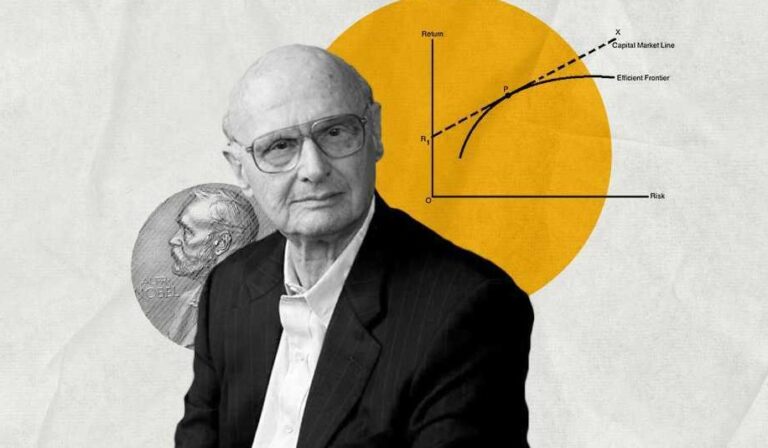
- Harry Markowitz, father of modern portfolio theory
- The man who defined variance in investment
If he were a teenager today, Harry Markowitz probably wouldn’t have spent his childhood playing the violin or reading the philosophy of René Descartes. But growing up in Chicago in the 1930s, Markowitz enjoyed both, as well as playing baseball and football. The bookish son of two grocers had little interest in the world of money.
Yet after his undergraduate degree at the University of Chicago, Markowitz decided to stay on and pursue a graduate degree in economics. ‘Descartes was a big inspiration, so when I went into economics I naturally gradually gravitated towards the economics of uncertainty,’ he recalls. ‘It was a wonderful time.’
In 1950, a chance meeting set Markowitz on the path towards revolutionising how the investment industry functioned. For a long time, people intuitively understood that riskier investments should generate higher returns to compensate for the dangers of losing their money, but there was little rigour to it. If Markowitz hadn’t struck up a conversation with a visiting stockbroker one day while waiting for his university supervisor, we wouldn’t apply his economic thinking to markets today.
The 25-year-old went on to write a groundbreaking paper entitled ‘Portfolio Selection’. Published in the Journal of Finance in 1952, it argued that returns should be judged against, and optimised for, the amount of risk taken. Since risk can be a vague concept, Markowitz used ‘variance’, or volatility, as a substitute. According to his argument, if stocks are more volatile than bonds, investors should expect better returns to justify the increased risk.
While Markowitz was not the first to use volatility as a synonym for risk, he was the first to put it in a framework, according to Richard Bookstaber, a former risk manager who now works for the University of California. ‘It became self-evident that this was the way to look at the world.’
Together with other insights – such as the importance of diversification – this became known as ‘modern portfolio theory’. Today it underpins much of the modern investing world.
Comprehension questions
Discussion
- Why do you think Harry Markowitz was successful?
- Who or what was an inspiration for you when you were growing up?
- Has a chance meeting ever led to a turning point in your life? What happened?
Scenario: Investment Decision
Imagine you are meeting with an experienced investor to discuss a new investment opportunity. Your task is to convince them that you are a good candidate for an investment, but you must also acknowledge the risks involved. Use the following words: contacts, effort, intelligence, luck, qualifications, taking risks, talent.
Step 1: Preparation
- Objective: Prepare a short pitch (2-3 minutes) explaining why the investor should consider investing in your idea.
- Instructions: Think about the following:
- How will you use your contacts and network to make the investment successful?
- What effort are you willing to put into the project to reduce risk?
- How does your intelligence and talent contribute to managing risks and ensuring success?
- How much luck plays a role in the outcome of investments and how do you balance that with the risks?
- What qualifications or previous experience do you have that will make the investment less risky?
- How comfortable are you with taking risks in investments, and what strategies do you use to mitigate them?
Step 2: Roleplay
- Objective: Take turns practicing this pitch, either with a partner or with yourself (recording if solo).
- Instructions: In the role of the investor, ask questions based on the pitch, such as:
- “What qualifications do you have that make you a trustworthy partner in this investment?”
- “How do you plan to handle risks that may arise during the project?”
- “Do you think luck is an important factor in your plan? Why or why not?”
- “What steps are you taking to ensure you succeed despite the risks involved?”
Step 3: Discussion
- Objective: Discuss the importance of contacts, effort, intelligence, and other factors in successful investments.
- Questions:
- “Do you think talent or qualifications are more important when it comes to reducing risk in investments?”
- “How do you weigh the role of luck when making investment decisions?”
- “What are the risks you are most comfortable taking and why?”
Phrasal verbs related to Risk in Investment
Look at the following phrasal verbs, definitions and example sentences.
[wpdatatable id=71]

Practice exercise 1
Discussion
- Do you think it’s important to take on challenges in life, even if they’re risky? Can you think of a time when you took on a big challenge?
- When was the last time you decided to branch out and try something new, like a hobby or activity? How did it go?
- Do you think it’s important to branch out in life and not stay in your comfort zone? Why or why not?
- Do you think people should go for their dreams, even if there’s a chance of failure? Why or why not?
- Are there areas in your life where you’ve had to cut back on certain habits or activities to reduce stress or save money?
- Do you think it’s necessary to always hedge against risks in life, or is it sometimes okay to embrace them?
- Have you ever had to hold out for something better, like waiting for the right job opportunity or a better deal? Was it worth it?
- Do you think it’s better to settle for something that works, or should you always aim for the best, even if it means taking more risks?