
THE ORIGINS OF HALLOWEEN 🎃
Every year on October 31st, streets fill with costumes, spooky decorations, and the sound of laughter — but behind the fun lies a much older and darker story.
Halloween’s origins trace back over 2,000 years to the ancient Celtic festival of Samhain (pronounced sow-in). For the Celts of Ireland, Britain, and northern France, this was a night when the barrier between the living and the dead was believed to weaken. Spirits were said to wander the earth, and people lit fires and wore disguises to protect themselves from these supernatural visitors.
As Christianity spread, the Church attempted to replace pagan traditions with All Saints’ Day on November 1st, also known as All Hallows’ Day. The night before — All Hallows’ Eve — gradually became Halloween. Yet many of the older, superstitious customs survived beneath the surface.
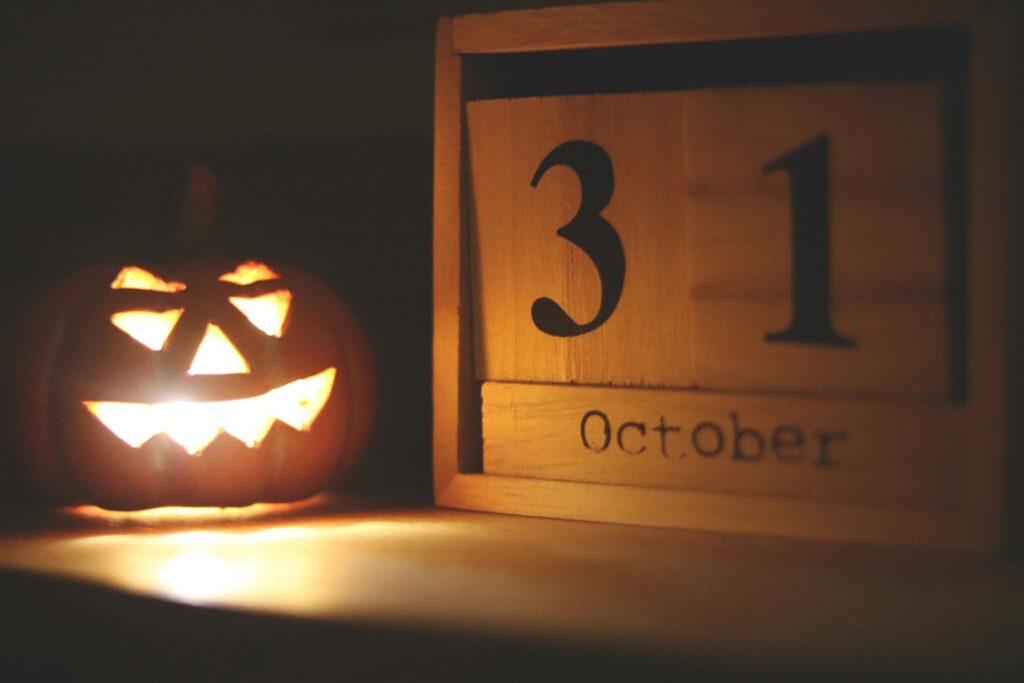
When Irish immigrants brought Halloween to North America in the 19th century, it began to change. The ancient rituals were transformed into more playful traditions such as carving pumpkins (once turnips) and trick-or-treating.
Though now seen as a night of fun, Halloween still carries echoes of its mysterious past — a reminder of how ancient fears can linger beneath even the most familiar celebrations.
Vocabulary practice
Look at the following words from the text. The part of each word that is capitalised shows where the stress goes.
