Topic 1.4.4 Perfect Tenses

PERFECT SIMPLE TENSES

Warm up

1.Work in pairs:

How many devices do you have connected to the internet at home?

Have you ever had a problem with a virus?

What happened?

Vocabulary

Exercise 2

Reading

3.Read the article on the Wannacry cyberattack quickly. Why was the cyberattack a warning for interconnected devices and bitcoin?

Global cyberattack is a warning for ‘internet of things’ – Nikkei Asian review

Tuesday May 16, 2017

TOKYO – The recent global cyberattack targets security weaknesses in web-connected devices and the anonymity of bitcoin.

Chief Cabinet Secretary Yoshihide Suga said on Monday he had been told of a number of victims in Japan. By Saturday morning, roughly 2,000 terminals at some 600 Japanese IP addresses had been hit.

One computer was affected at water and sewer services in the city of Kawasaki. A Hitachi company’s appliance-ordering system came to a standstill, preventing transactions with retailers, and workers were still trying to bring the system back online on Monday.

Elsewhere, there were attacks on infrastructure and production centres. A UK plant belonging to Japan’s Nissan Motor had been targeted, as was French automaker Renault. British hospitals and the Spanish telecom Telefónica were hit as well. German railways suffered attacks on electronic boards, as well as in ticket machines.´

The attackers had chosen targets that would suffer greatly if they did not recover their data quickly, says analyst Toshio Nawa of Japan’s Cyber Defense Institute. Such organisations are easy to extort money from because they cannot afford for operations to stop.

Attackers targeted production control devices and other equipment that runs outdated operating systems. Users cannot install the latest security updates due to software incompatibility, which is an alarm bell for the internet of things, says Hiroki Takakura, a professor at the National Institute of Informatics.

This cyberattack came in the form of ransomware, which encrypts users’ data, making it inaccessible, then displays a message demanding payment in order to restore it. Many of those affected have reportedly paid up.

Ransomware has existed since the 1990s, but has become more prevalent with the spread of bitcoin. The virtual currency can be bought with a credit card and easily sent digitally. No financial institutions are involved, so users are harder to identify, giving hackers in this cyberattack reason to think they will have escaped capture.

The attack happened in Europe on a Friday, when it would be harder to respond. Attackers had counted on victims being impatient to solve the problem that day, said Nawa of the Cyber Defense Institute.

4.Read the article again and complete the sentences.

Grammar – Perfect tenses

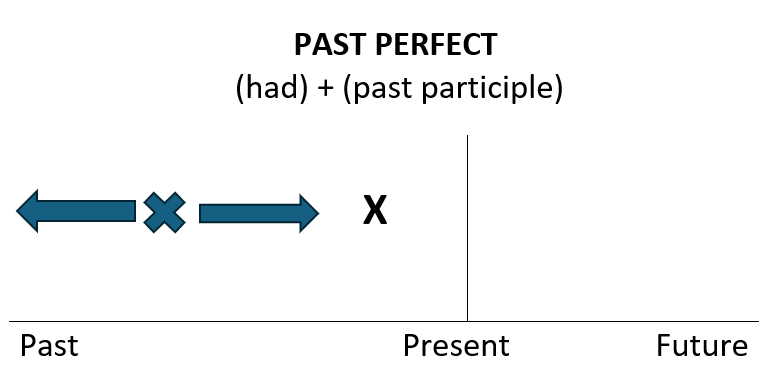
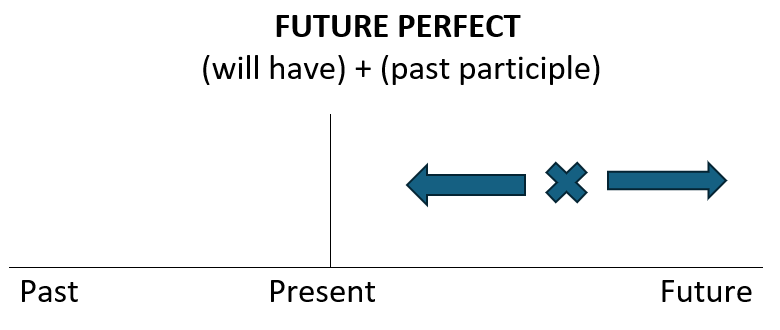
5A. Look at the underlined verb forms in the article and match them with the timelines (A-C). What are the names of these three tenses?

6.What do all these tenses have in common?

They link events to the present

They link two points in time

They refer to an indefinite time

GRAMMAR REFERENCE

Past Perfect Simple

Perfect tenses share one common feature: they all link two points in time. The Past Perfect Simple links a point in the past with a point further in the past. We can use the Past Perfect Simple:

to talk about a finished or completed past action/event that happened before another action/event in the past.

Before I worked in this office, I hadn’t worked at a smart desk.

to talk about life experience before a point of time in the past. In this case, we often use the Past Perfect Simple with the adverbs ever, never, already, yet and just.

I had never seen this kind of smart building before!

with time expressions such as by, by 2010, by the end of the week, by the time, etc.

By the time I had installed the new software, it was already outdated.


Present Perfect Simple

The Present Perfect Simple links a point in the past with a point in the present. We can use the Present Perfect Simple:

to talk about indefinite time in the past. In this case, we either don’t know when something happened, or we don’t consider when it happened important. We often use the Present Perfect Simple with time expressions such as recently, in recent years, this week/month/year, etc.

The number of online devices has grown exponentially in recent years.

to talk about past actions or states which are relevant now. In this case, we often use the Present Perfect Simple with expressions such as already, before, ever, never, recently, always, still, just and yet.

We’ve just installed security updates in the system.

to talk about past actions or states which are still continuing or are still true now. In this case, we often use the Present Perfect Simple with the time expressions for and since to say how long an action or state has continued or when it started.

Malware and ransomware have existed since the 1990s.

(since = the point when the period of time began)

I have worked in IT for nearly twenty years.

(for = the length of time)


Future Perfect Simple

The Future Perfect Simple links two points in the future. We can use the Future Perfect Simple:

to talk about events in the future which will happen before a certain time.

Within a few years most companies will have installed smart technology in the office.

By the end of the year, we will have implemented a policy for security updates

Practice

Activity 7.

8.Write six sentences about the challenges of smart technology in your organisation or place of study. Think about past, recent and future challenges you dealt with/have dealt with/will have dealt with by 2030. Try to use different tenses in each sentence.

9.Compare your sentences with a partner. Discuss the most significant technological challenges in the workplace in the past, present and the future.

HOMEWORK

1.Choose the correct response