Topic 1.6.2 Future Continuous
FUTURE CONTINUOUS
Warm up
- What does the word dream mean to you? Can dreams inspire real change?
- What does equality mean to you? Do you think all people are treated equally in today’s world? Why or why not?
- Who are some historical figures who have fought for equality and justice?
- If you had to give a speech about an important social issue today, what topic would you choose?
Reading
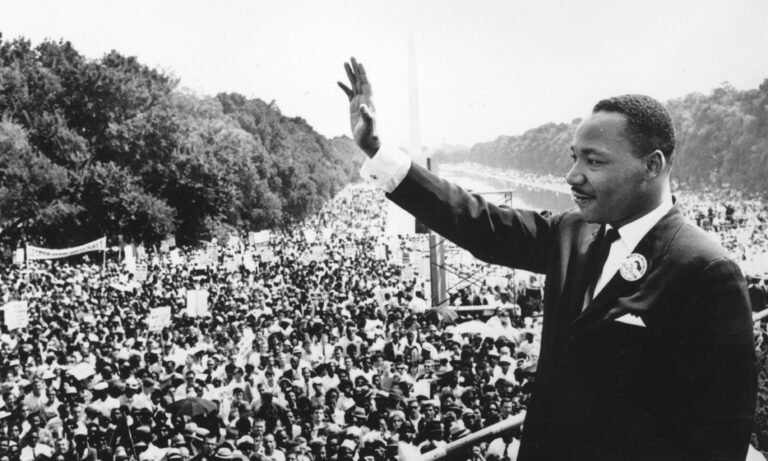
I have a dream that one day this nation will be announcing its faith: “All men are created equal.”
I have a dream that one day on the red hills of Georgia, the sons of former slaves and the sons of former slave owners will be sitting down together at the table of brotherhood.
I have a dream that one day even the state of Mississippi, a state sweltering with the heat of injustice and oppression, will be a place of freedom and justice.
I have a dream that my four little children will be living one day in a nation where nobody will judge them by the color of their skin but by the content of their character.
I have a dream today!
This is our hope, and this is the faith.
With this faith, one day, we will create a stone of hope from the mountain of despair. With this faith, we will transform the jangling disagreement of our nation into a beautiful symphony of brotherhood. With this faith, we will be working together, struggling together, standing up for freedom together.
We know that we will be free one day.
Discussion questions
- What is the main message of the speech?
- What does King mean by “a stone of hope from the mountain of despair”?
- How does this speech make you feel? Can you relate any part of it to your own experiences?
- What qualities do you think a great leader should have? Does Martin Luther King Jr. demonstrate those qualities in this speech?
- Do you think Martin Luther King Jr.’s dream has been achieved? Why or why not?
- What challenges still exist in achieving true equality today?
In the text there were various examples of the Future Continuous.
Positive
will be + verb + ing
Uses
1.We use the future continuous to talk about an activity that will be in progress at a particular time in the future.
e.g. We are planning to start the business lunch at 2pm and finish at 4pm so at 3pm we’ll be having lunch.

2.We often use a time clause (with a present tense) and the future continuous to talk about a future event that will happen when another activity is in progress.
We’ll be planning the budget when you arrive.
I’ll be waiting for you when your plane arrives.
This is the same structure as the first conditional (if/when + present, will + infinitive), but with the future continuous instead of will + infinitive.
3.We also use the future continuous to express the idea that two or more actions will be happening at the same time.
We’ll be talking and they’ll be listening.
While my boss is giving his presentation, I will be writing the report.
NOTE: We say ‘is watching’ because while is a time expression. We cannot use will after time expressions such as when, while, before, after, by the time, as soon as, if, unless, etc.
Questions
- What will you be working on next year to achieve your career goals?
- Will you be traveling anywhere exciting in the next few months?
- This time next week, what will you be doing during your free time?
- Will you be learning any new skills or hobbies over the summer?
- In five years, where do you think you will be living and working?
- Will you be spending more time with family during the holidays?
- What projects will you be focusing on at work in the upcoming quarter?
- Will you be attending any special events or celebrations later this year?
NEGATIVE FORM
- Will + not + be + verb + ing
- Won’t (contracted version) + be + verb + ing
The negative future continuous tense is used to describe actions that will not be happening at a specific time in the future. Here are some examples:
- I won’t be working at 8 pm tomorrow.
- They won’t be attending the meeting next week.
- I’m sorry, but I won’t be joining you for dinner tomorrow.”
- He won’t be travelling with us because he has another commitment.”
- We won’t be using the old software after the update.”
QUESTION FORM
- Will/Won’t + subject + be + verb + ing ?
The question form of the future continuous tense is used to inquire about actions or events that will be ongoing at a specific time in the future.
- Will you be attending the conference next month?”
- Will they be staying at the new hotel during their trip?”
- Will she be working on the project when we arrive?”
- Will we be meeting with the clients on Tuesday?”
- Won’t you be joining us for dinner this weekend?”
Speaking practice
Make some questions using the future continuous to ask your partner about the future.
e.g. Will you be having dinner at 9pm tonight?
Practice exercise 1
Practice exercise 2
Speaking Practice 2
Work in pairs. Ask your partner what he/she will be doing at the specific times below.
Example: At 8am tomorrow, I’ll probably be having breakfast. What will you be doing at 8am tomorrow?
8am tomorrow
midday tomorrow
4:30pm tomorrow
9pm tomorrow night
this time next week
this time next year
Extension activities
Role-Play Future Predictions
Activity: Divide into pairs or small groups. Each group chooses a topic (e.g., work, technology, the environment) and role-plays a conversation where they predict what they will be doing or experiencing in the next 10-20 years.
Example: “In 2040, we will be driving electric cars and reducing pollution.”
Future News Report
Activity: Ask students to write and present a news report from the future, focusing on upcoming events. They should include phrases like “will be doing,” “will be happening,” etc.
Example: “By 2035, scientists will be exploring Mars, and cities will be expanding into space.”
Interactive Timeline
Activity: Create a timeline for the next 20 years. On this timeline, you must include predictions for your life (or global events) using the future continuous.
Example: “In 2030, I will be working as a software developer.”
Question Chain
Activity: One student asks another a question using the future continuous (e.g., “What will you be doing next summer?”). The person who answers must then ask another student a different future continuous question. The chain continues around the class.
Listening: Listen to the following video and answer the questions:
- What will Dany be doing this evening?
- What will his father and mother be doing in the evening?
- What does Bob propose to his parents to do in the evening?
- What time does he want to meet them?
Watch this video to practice the future continuous.