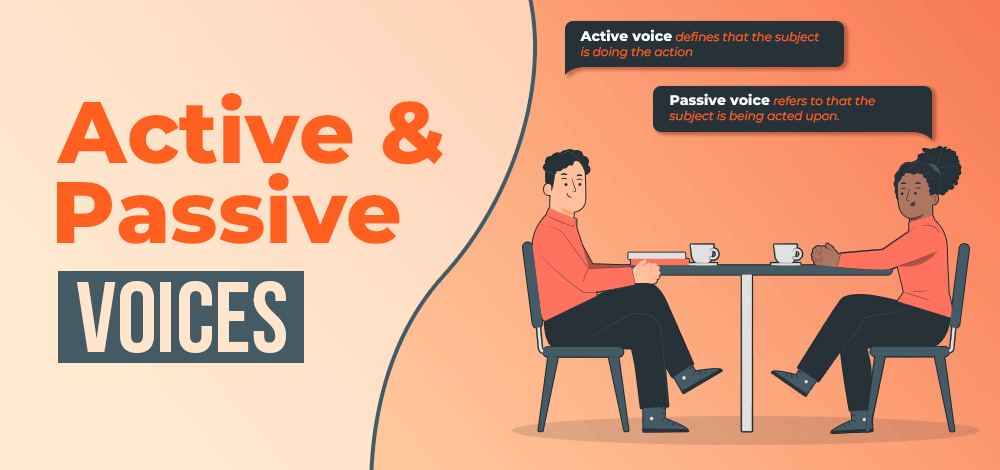
The passive voice is a grammatical construction where the focus is on the action and its recipient, rather than who or what is performing the action.
Form
The basic structure of the passive voice is:
Subject + Form of ‘to be’ + Past Participle (+ by + Agent)
Examples:
Active: The manager approves the budget.
Passive: The budget is approved by the manager.
The agent performing the action (if mentioned) is usually introduced by the preposition “by.”
Usage of Passive Voice in Business Context
The passive voice is particularly useful in business English for several reasons:
Focus on the Action or Result:
In business contexts, the focus is often on the action or result rather than who performed the action.
Example: “The policy was updated to reflect new regulations.” (Emphasizes the policy update rather than who updated it.)
Formal Tone:
The passive voice can create a more formal tone, which is often appropriate in business communication.
Example: “The proposal was reviewed by the committee.”
Agent is Unknown or Irrelevant:
Sometimes, the doer of the action is unknown or not important.
Example: “A mistake was made in the calculations.
Diplomacy and Politeness:
The passive voice can be used to be diplomatic and avoid assigning blame.
Example: “The issue was addressed in the meeting.”
Transforming Active to Passive Voice
To transform an active sentence into a passive sentence, follow these steps:
Identify the object of the active sentence (this becomes the subject of the passive sentence).
Determine the appropriate form of ‘to be’ for the tense.
Use the past participle of the main verb.
Optionally, include the agent (the original subject) preceded by “by.”
Example:
Active: The marketing team launched the campaign.
Passive: The campaign was launched by the marketing team.
Discussion questions
Present Simple Passive
How is coffee made in your country?
What languages are spoken in your city?
Is public transportation used frequently where you live?
Past Simple Passive
When was the last time a big event was organized in your town?
Were you ever invited to an important meeting or event?
What famous building was built in your country recently?
Future Simple Passive
Do you think robots will be used in most jobs in the future?
Will electric cars be sold everywhere in the next 10 years?
Do you think space travel will be offered to tourists soon?
Present Continuous Passive
Is any construction being done near your home right now?
Are new technologies being introduced in your workplace?
What problems are being solved in your community at the moment?
Past Continuous Passive
Was your city being developed when you were growing up?
What new policies were being implemented in your company last year?
Was any work being done on the streets in your neighbourhood recently?
Listening: Listen to the audio and answer the questions:
For how many years were the burglars sentenced to?
What did they steal?
How did they escape?
Who does the police think is behind the escape?
Speaking: with the help of the picture below, work in pairs and retell the story. Use the Passive.
Reading
Read the text and answer the questions below:
The Rise of Microsoft and Bill Gates
Bill Gates, the co-founder of Microsoft, is considered one of the most influential figures in the technology industry. In 1975, Microsoft was started by Gates and his childhood friend Paul Allen with the vision that a computer would be placed on every desk and in every home.
Microsoft’s first big success came when a deal was secured to provide the operating system for IBM’s personal computers. This operating system, called MS-DOS, was developed and became the foundation for Microsoft’s growth. In the 1980s and 1990s, Windows, a graphical extension of MS-DOS, was introduced, which revolutionized personal computing with its user-friendly interface.
Despite intense competition and legal challenges, innovation was continued by Microsoft. Under Gates’ leadership, Microsoft Office was created, and Internet Explorer was introduced as one of the first web browsers.
Looking to the future, cloud computing, artificial intelligence, and quantum computing will be focused on by Microsoft. These technologies will be integrated into their existing products, and new solutions will be created for businesses and consumers alike. Gates’ vision and leadership will be seen as continuing to influence Microsoft’s strategic direction and commitment to innovation.
Comprehension Questions:
True or False:
Short Answer Questions:
Who co-founded Microsoft with Bill Gates?
What was the graphical extension of MS-DOS called?
Name one key product introduced by Microsoft in the 1980s or 1990s.
How will Gates’ vision influence Microsoft’s future?